The preservation of the value and good technical state of our water utilities, is not only our common interest but also the legal obligation pursuant to legislation (Act CCIX. 2011, about water utility services) as well. From July 15, 2012 the water utilities and property evaluation is a mandatory annex for all of management contracts, and the entire national water utility infrastructure shall be evaluated no later than 31 December 2019.
The BDL Ltd. plays leading role, both in the public and municipal-owned water utilities asset-evaluation in the last decade. Our company performs asset evaluation since 2007 specifically for water utilities, municipalities responsible for care. During our work, we can rely on technical engineering, economic and asset management experiences of our employees from more decades.
In addition to the asset evaluation activities we participate in many of technical, economic, asset management guidance. We conducted including:
The multi-faceted integrated utility property assessment database – by developing TIKA software and multi-faceted integrated asset evaluation methodology, we set out for our objectives the creation of basic conditions of an effectively sustainable and secure water utility services, as well as a utility management responsible for preservation of value of our water utilities. With the help of TIKA inventory and asset evaluation software it’s possible the effective establishment of an outstanding quality public utility database, insuring thematic queries.
With the experience of asset evaluations performed on about 1,600 settlements by TIKA methodology and software support, we are at the disposal of our clients.
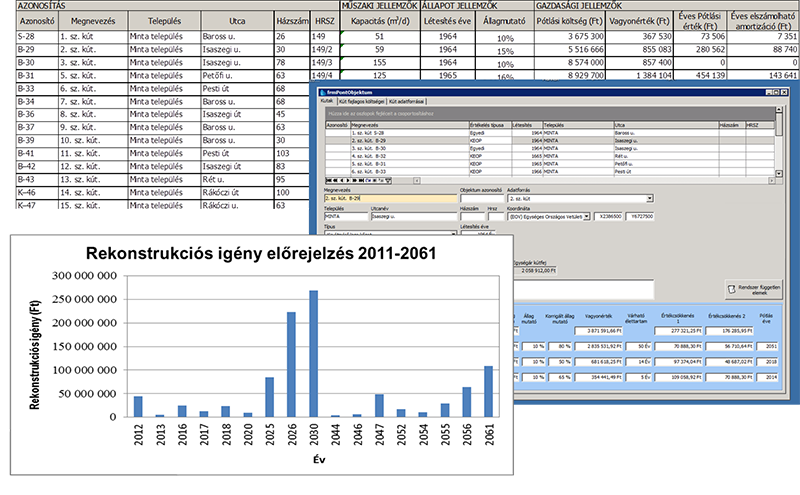
With our self-developed, award winning multifaceted Integrated Utilities Assessment Database (TIKA) software we provide a holistic and flexible service.
TIKA software is a fully integrated, complex system especially developed for Asset evaluation. Characteristics of the TIKA software:
Evaluation tasks:
During the evaluation process we cooperate and work closely together with local experts, and water professionals:

Our company, in the interest of the complete water utility asset evaluation, as well as the rolling development planning, assesses and identifies the complete specific system elements and objects of a settlement. If there is no technical database, where the parts of water utility objects (structures, equipment and facilities) are not registered, the technical inventory must be created.
The creation of the technical inventory is a requirement of the asset evaluation. We order the existing data, technical documentation and any other information in a structured, unified database. This inventory is the basis of asset evaluation.
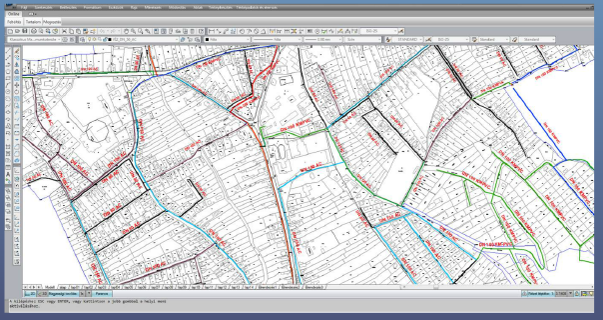
In the recent years we established a complete technical inventory of a county right city, collaborate with the technical service professionals, where the technical inventory includes nearly 100 000 objects.
We actualized many times the technical inventory of county right cities and settlements, based on the existed database, which are suitable for the purpose of asset evaluation, the setting up the inventory of assets.
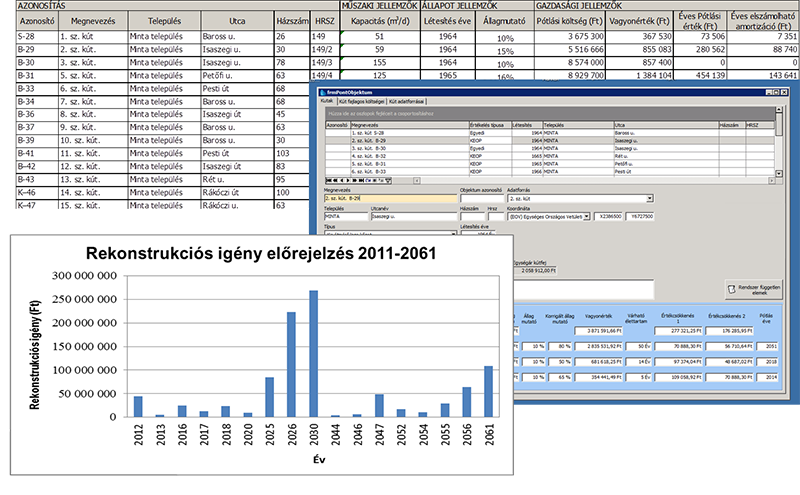
Over the past decades, our company contributed significantly to the development of the responsible asset management in Hungary, with the determination of the water utilities fair value.
Since 2007, we evaluated about 1 600 pieces water utility systems of settlements, or we contributed it. The technical inventories of this utility asset evaluation are contained in the Multipurpose Infrastructure Assessment Database – “MIAD” software.
The evaluation of the water utilities is the bases for a predictable operation. The structured utility asset database, established as a result of the utility asset evaluation process, with this operators, municipalities, Hungarian State; utility owners are given an objective view of the value of the utility assets, their real economic and technical state. Based on these the operators and owners are capable of efficient and a sustainable asset management and better operational decision-making.
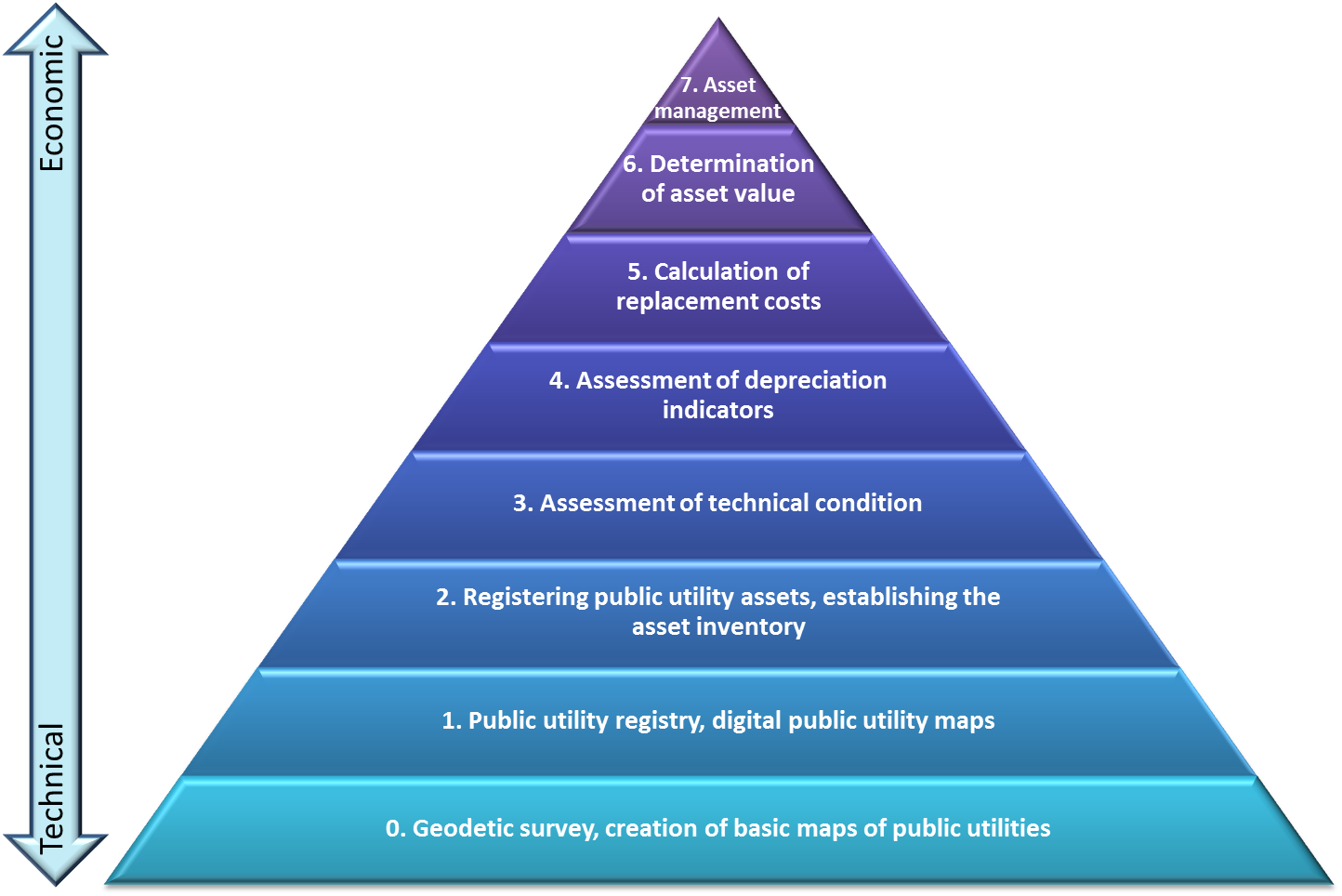
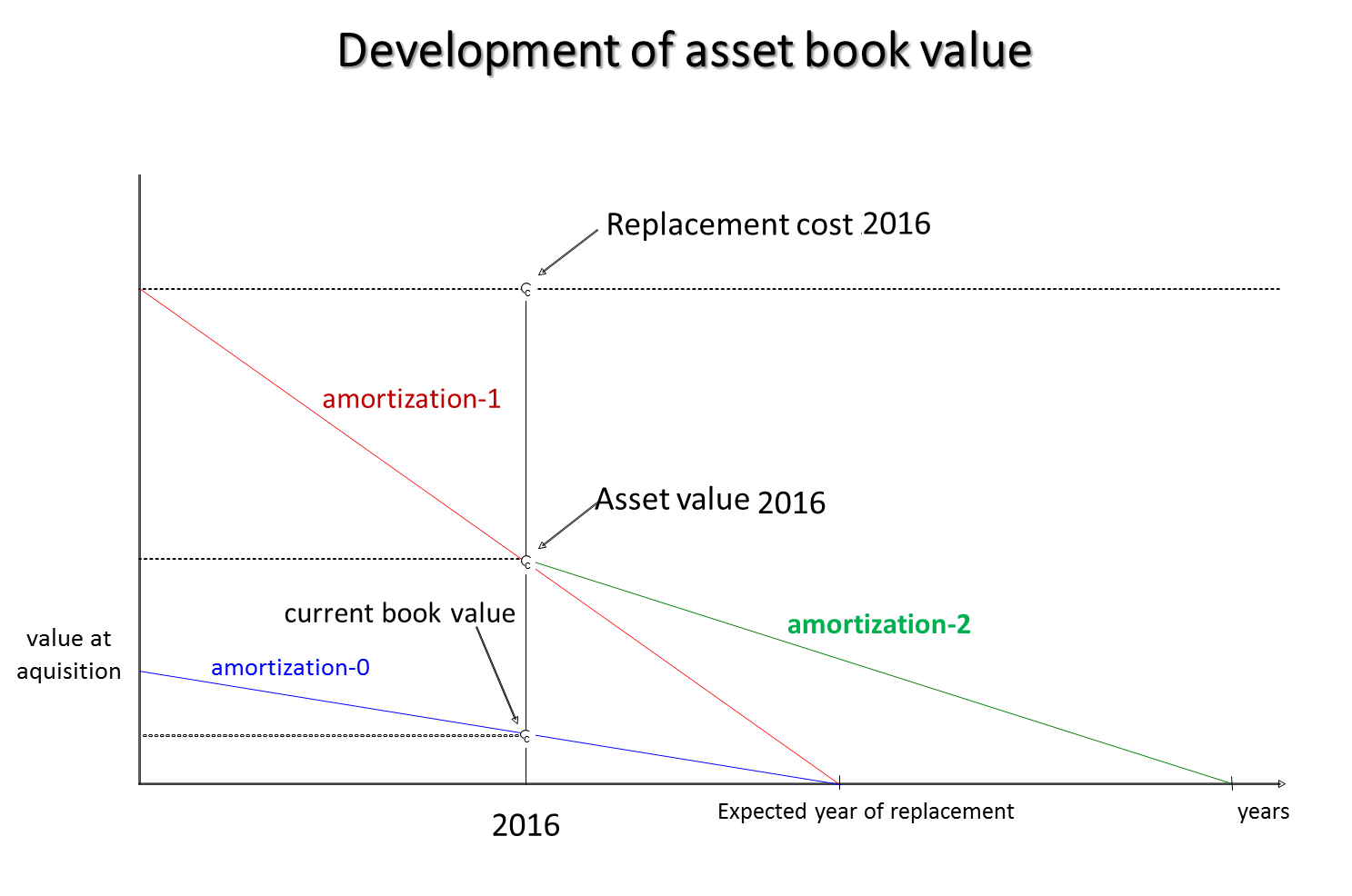
The asset value according to related laws with replacement cost method and Depreciated Replacement Cost (DRC) method must be define. The lower, initial levels of utility asset evaluation pyramid serve the production and supporting the necessary information.
We can prove the quality of our asset evaluation with numerous references and the satisfaction of our customers. With regard to the complete asset evaluation inventories our company have asset management specialist with decades of professional experience, as well as continuous civil, mechanical engineers, designers and audit partners.
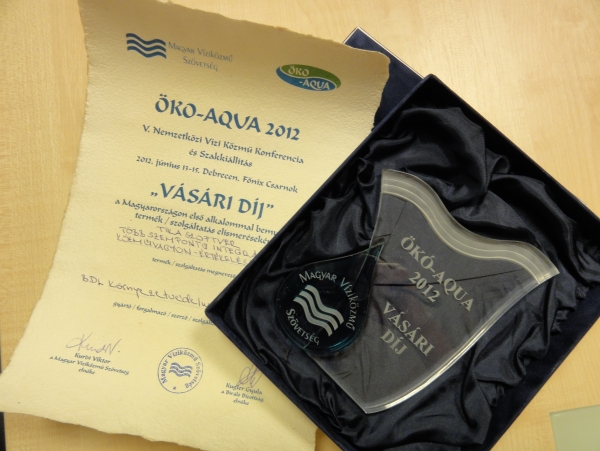
The replacement plan presents the expected replacement needs of water utilities, based on the MIAD database consecutively in 50 year horizon level.
Within the design work we make a long-term replacement plan and replacement needs forecast, processing by existing and produced data, or additional technical data.
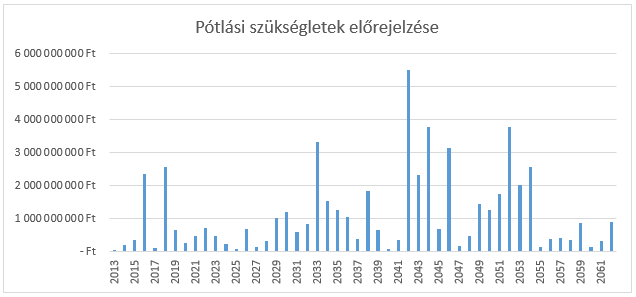
The complete, long-term replacement plans may serve as the basis for the replacement part of rolling replacement plans, because they prepare replacement needs the same structure, divided into disciplines and water utility systems, for the entire water and wastewater service area. This correctly fits the 292/2014 (XI.26) Hungarian Government Regulation Chapter VIII / A., amending Government Decree 58/2013. (II.27.).
The asset inventory serves as starting base in any case the Integrated Multi-attribute Water Infrastructure Asset Evaluation.
For the actual scheduling of expected, planned replacements and effective support of the rolling replacement plan, further analysis and additional analytical work required. Based on this result, the rational technical and professional aspects considering the replacement peaks can be prolonged, timing can be optimized.
In recent years we made these long-term replacement plans mainly for CBA calculations, found in EU investments related feasibility studies. During these asset evaluations we organize the existing and newly established asset items in a homogenous database, and then we analyzed the replacements together, that are required each year, in a 50 years long time interval. The long-term replacement plan for the Hungarian State-owned water utilities belongs to our featured references.
For the sustainable asset management we provide economic and technical advice with the following services:
The audits also aim to assist the organization – with proposals - in the conversion to effective operational and functional model.
For certain decisions it is required to determine the goodwill of service provider. In recent years, we made company valuation in addition to screening many smaller and larger services. Our engineers, technical designers and economists with asset evaluation rights contributed to these projects.
Company valuation in a multi-criteria approach:
Determination of the company's asset-based company value, based on
Determination of the company’s results-based value, based on
Yield-based valuation:
We provide for the owner municipalities the professional advice including the following services in case of new and existing regulatory requirements:
Our Company was made many studies for the decision makers, municipalities. These studies ensure the real knowledge about their water utility service, both technical and legal, economic conditions.
Among for Szentendre settlement, for Oroszlány settlement, as well as a service area affecting Hajdúság settlements we made decision preparation study, which was funded by the municipality’s decisions to be taken long-term and sustainable water utility supply.
We are at service to the settlements, if necessary, we corporate with an independent auditor to the work be done.
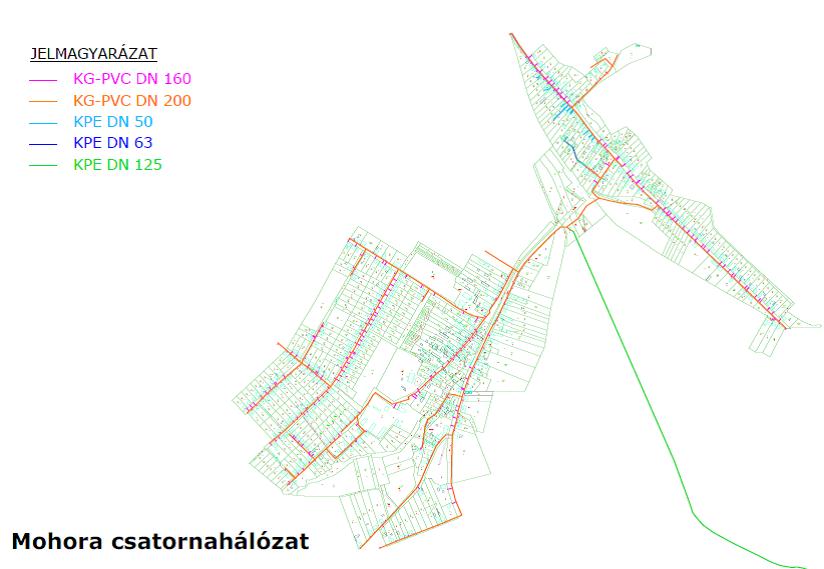
Evaluation and survey of the whole operating assets for the waterworks, utility suppliers can be required based on professional method.
Due to the new water regulation (Act CCIX. 2011) and real decision making of the asset management, it is necessary to evaluate the water utility assets. However, it may be necessary to survey the operating assets and to review the existing book value, as well.
With the operating assets survey and the knowledge of the real market value of water/wastewater operating assets the sustainable and effective maintenance and present the reasonable costs can be recognized.
Our references consist of many operating assets surveys and evaluations by adapted and applied evaluation method.
The purpose of a complex rolling development planning is the establishment and long-term support of a water utility system operation, which serves the drinking water supply and wastewater drainage and treatment.
To this effect, we are conducting many complex investigations for example, water demand and water loss analysis, error statistics evaluations, analysis for energy efficiency, technical and functional status assessments. After these investigations we try to provide a solution for technical and operational problems, so besides the growth of the operation safety can reduce the operational and replacement costs.
We develop our design methodologies continuously. The rolling development planning (RDP) methodology aims are the following points:
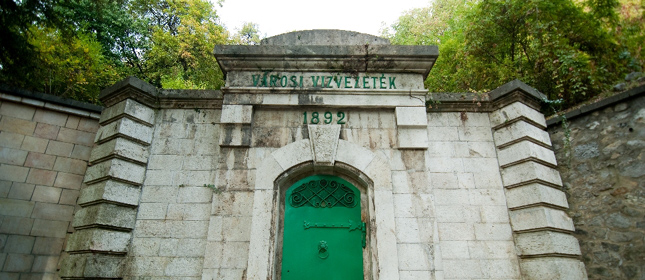
Processing the experiences from professional references, our goal is that the rolling development planning will be efficient and reliable. Within the framework of a pilot project, preparing a complete study, which give a basis for a rolling development plan of a water supply and sewage drainage and cleaning system. The experiences that gained from the study, were presented at many professional conferences.
The software is based on the TIKA-database, which supported the rolling development planning (GFT) process, and is compatible with many data and suitable to storage from other database, for example hydraulic data, fail statistics and other statistical data.
“GFT” design methodology conceptually takes into account the priorities in behalf of effective operation, which is calculated water demand, actual trend of water consumption actual replacement value of the sufficient capacity.
Our company try to meet the expectations of the operators, to use and development the existing technical inventory systems. To this end, the structure of the TIKA-GFT database is tried to shape flexibility, to snap the specific service registration systems.
A GFT tervezés során alkalmazzuk a több szempontú integrált vagyonértékelési módszertan, a dinamikus költségelemzés (DCC) módszertani elemzések eszközei mellett a hidraulikai modellezés eszközeit is.
A rendelkezésünkre álló hálózati adatok alapján összeállítjuk az adott település vízellátó rendszerének hidraulikai modelljét. A modell működésének ellenőrzése céljából vízhozam és nyomásméréseket végzünk bizonyos mérési pontokon. Elemezzük minden esetben a jelenlegi és távlati vízigényeket. Külön vizsgáljuk az átmérő optimalizálás lehetőségeit, különös tekintettel a beruházási költségekre, és üzemeltetési szempontokra, valamint a tűzivíz igény kielégítésének optimalizálását is.
Professional economic planning services of our company facilitate succesful investments and efficient operation.

A magyar Közbeszerzési Törvény a 2014-es EU-s közbeszerzési irányelvekkel összhangban új alapokra helyezi az értékelési szempontok meghatározását és kiemelten kezeli az életciklusköltség szemlélet eljárásokban történő gyakorlati alkalmazását.
Számos közbeszerzésre igaz, hogy kizárólag az ajánlati ár alapján nem ítélhető meg helyesen a közbeszerzés értéke az ajánlatkérő számára. Hiszen egy-egy beszerzési döntéssel az ajánlatkérő nem csak arról dönt, mennyit hajlandó fizetni az adott dologért, de számolnia kell minden további költséggel is, mely a beszerzett eszközzel, rendszerrel kapcsolatban felmerül majd annak használata során.
Víziközmű beruházások esetén az LCC alkalmazása kifejezetten ajánlott a Közbeszerzési Hatóság vonatkozó útmutatása, valamint a releváns szakmai szervezetek ajánlása alapján is.
A kizárólag az ajánlati ár alapján hozott döntésekkel szemben, az életciklusköltség (LCC) alkalmazása az optimális, legköltséghatékonyabb ajánlatok kiválasztását teszi lehetővé.
A gördülékeny és eredményes közbeszerzési eljárások lefolytatását támogatva, cégünk vállalja az egyes kiírásokhoz kapcsolódóan:
LCC-vel kapcsolatos oktatási, képzési tevékenységünkről és lehetőségekről további információk az Oktatás menüpontban.
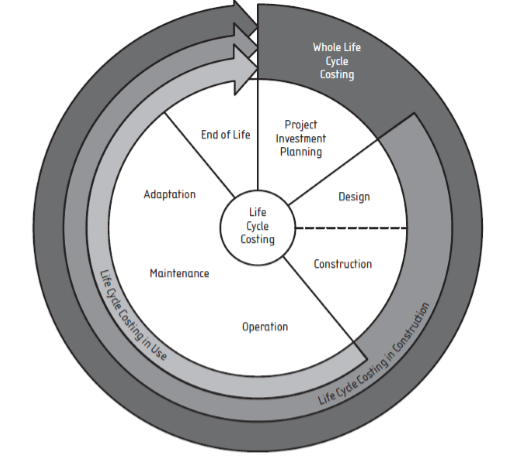
Életciklusköltség (LCC), mint a vízipari termékfejlesztés motorja
Napjaink vízügyi kérdéseinek egyre hangsúlyosabbá válása életre hívja az innovatív eszközök, eljárások megjelenését, illetve az integrált szemléletmód kialakítását.
Az infrastrukturális beruházási folyamatokat tekintve különösen érvényes a tervezés és a kivitelezés fázisában a beruházásokhoz kötődő több dimenzióban megjelenő hatások számbavétele mellett, a gazdasági, pénzügyi fenntarthatóság jövőbeni biztosítása, melynek kiemelkedő módszere a beruházási folyamatokban világszerte hatékonyan alkalmazott és elismert, neves nemzetközi szakmai szervezetek (European Water Association, EWA) által támogatott Életciklusköltség-számítás (Life Cycle Costing – LCC). Az életciklusköltségek számszerűsítésével a hatékony és fenntartható technológiákat és eljárásokat meghatározzuk, amelynek köszönhetően a hosszú távra szóló, hatékony megoldások előtérbe kerülnek, hogy eredményesen szolgálják alapvető rendszerünket.
Ennek érdekében szervezetünk vállalja a vízipari gyártók, szereplők termékfejlesztési tevékenységének támogatását az Életciklusköltségek meghatározását meglévő, vagy akár fejlesztés alatt álló termékekre egyaránt.
A Dinamikus Költségelemzés (DCC) módszere, biztosítja a legkisebb összköltséggel járó műszaki megoldások kiválasztását a víziközmű-fejlesztések előkészítése során.
Az Európai Irányelveknek, jogszabályoknak, módszertani ajánlásoknak megfelelően, már a tervezés folyamatában képviseljük a megalapozott szakmai döntések előkészítését az aktív közreműködésünkkel kifejlesztett Dinamikus Költségelemzés módszerének alkalmazásával, mellyel cégünk már számos beruházás eredményes megvalósulásához és hatékony működéséhez járult hozzá, legyen szó költségelemzések elkészítéséről, vagy akár a Dinamikus Költségelemzés módszerének oktatásáról.
A Dinamikus Költségelemzés módszere a tervezési folyamatot jelenleg domináló, rövid távú pénzügyi szemlélet helyett, a költséghatékonyság és a fenntarthatóság szempontjainak érvényesülését támogatja a teljes életciklus szemlélet, valamint az életciklusköltség számítás módszerének alapján. A projekt-előkészítés első szakaszában hozott döntések a teljes folyamatra, végső soron pedig a teljes projekt sikerére és eredményességére nézve is meghatározók. Ebben a szakaszban rejlik a legnagyobb megtakarítási potenciál is, hiszen a folyamat előrehaladtával, a tervek, adatok konkretizálódásával egyre kisebb a mozgástér az optimalizációra, illetve a később jelentkező esetleges változtatási igények egyre több idő- és költség árán elégíthetők ki. A Dinamikus Költségelemzés segítségével meghatározott eredmények bemutatása sematizált, így könnyen értelmezhetők, átláthatók mérnökök és közgazdászok számára is.
A víziközmű beruházások előkészítése folyamán a változatelemzés szerepe alapvető fontosságú, hiszen az EU-s pályázati rendszerben a KEHOP 2-es prioritású programokban a változatelemzés elkészítése kötelező jellegű, melynek során a Dinamikus Költségelemzés módszere kiválóan alkalmazható, emellett bevált és hatékony módszer a Költség-haszon elemzések modellezése során is.
© 2026 BDL Enviromental Consulting Ltd.